

support and resistance price action trading strategy pdf
The more times Support is proved, the stronger it becomes.
Support and Resistance are lines on your chart.
You should place your stop loss at Support and Resistance.
If you follow the "theories" above, it would cost you money in the prospicient run. Because these are the biggest lies about Support and Resistance trading scheme.
And it's not your fault because these are stuff that's being taught in trading books and courses.
But don't worry.
After recitation this trading guide, you'll ne'erdannbsp;make these mistakes over again.
Specifically, here's what you'll learn:
- The 5 things about Support and Electric resistance (losing traders are not aware of)
- How to detect favorable risk to reward trades
- How to tell when Support or Resistance will break, so you don'tdannbsp;inscribe trades at the wrong time
- A Support and Resistance trading strategy — that lets you earnings from losing traders
Are you ready?
Then let's get started.
True statement #1: The more times Support or Underground (SR) is tested, the weaker it becomes
First, let's define Support and Resistance:
Support – Orbit on your chart with potential buying pressure
Resistance – Area on your graph with possible selling pressure
An example:


Now:
You've believably read trading books that pronounce… the Thomas More multiplication Support or Resistance is tested, the stronger it becomes.
But the truth is…
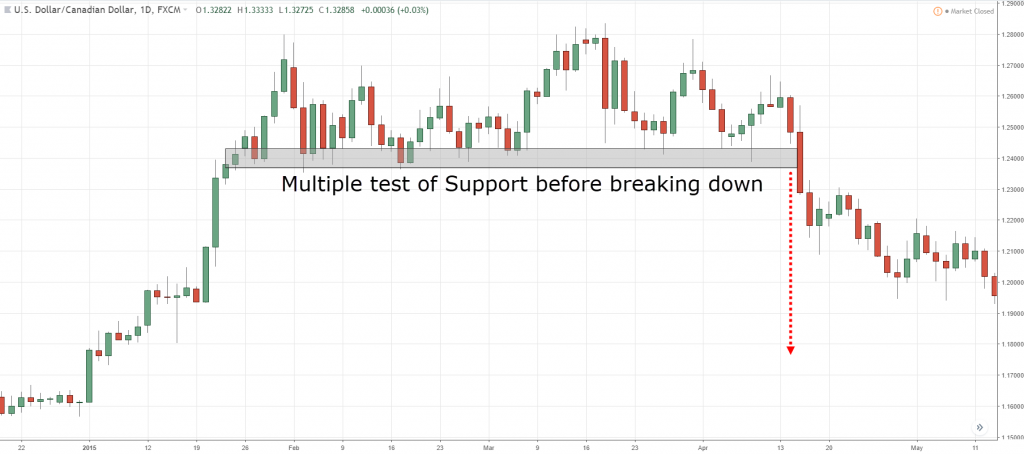
The much times Support or Resistance is tested, the weaker it becomes.
Here's why…
The market reverses at Livelihood because there is buying pressure to push the price higher. The purchasing pressure could be from Institutions, banks, or smart money that trades in large orders.
Suppose this:
If the commercialise keeps re-testing Support, these orders will eventually be filled. And when all the orders are filled, World Health Organization's left to buy?
Here's what I mean…
Pro Tip:
Higher lows into Resistance usually resultant in a breakout (ascending trilateral). Lower highs into Reenforcement usually result in a breakdown (descending triangle).
Let's advance…
Truth #2: Support and Resistance are areas on your graph (and not lines)
This is a mistake I'm inculpative of. Treating Put up and Resistance (Strontium) as lines on my graph.
Why?
Because you'll face these two problems:
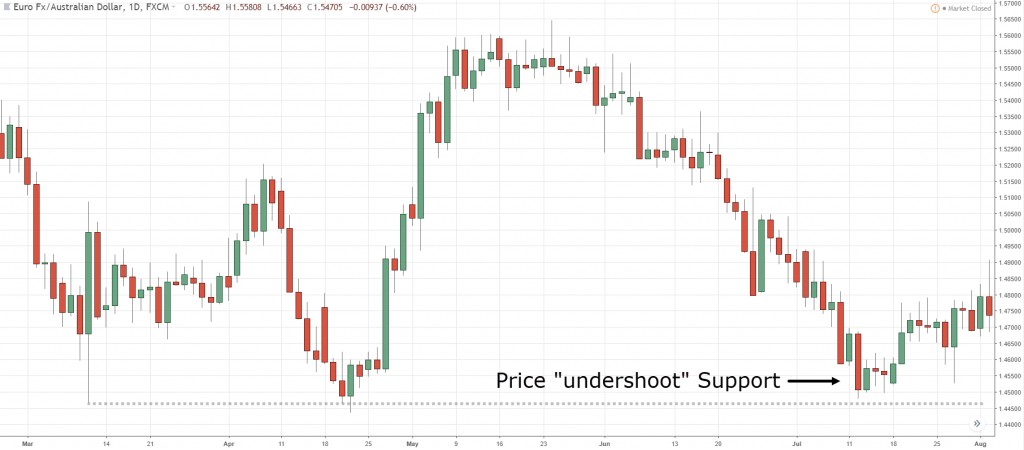
- Price "undershoot" and you miss the swop
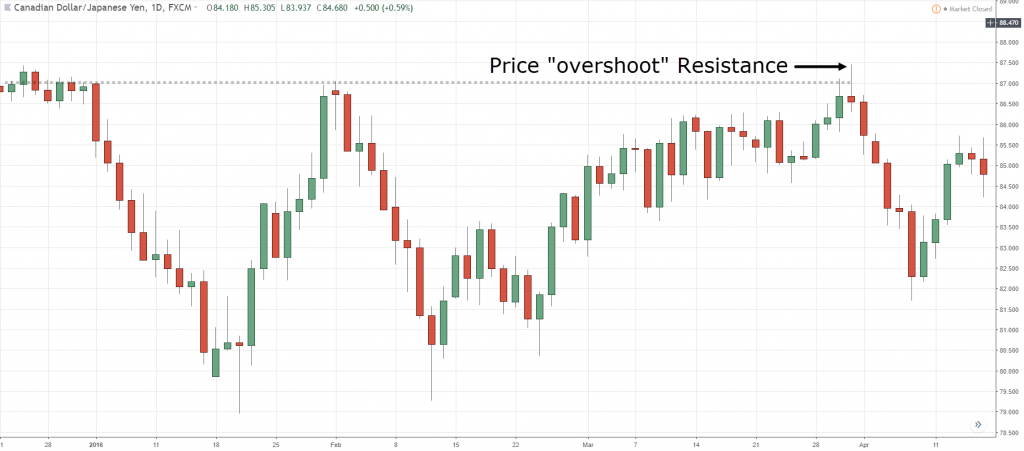
- Price "overshoot" and you assume SR is broken
Let me explain…
Price "undershoot" and you missed the trade
This occurs when the market comes around your Sr line, but not close enough.
So, it reverses back into the opposite direction. And you miss the trade because you were ready and waiting for the market to test your exact SR level.
An example:
Price "overshoot" and you assume SR is broken
This happens when the market breaks your SR level and you take over it's broken.
So, you trade the break… only only to realize it's a false breakout.
So, how do you puzzle out these two problems?
Easy.
Treat Support and Impedance as areas on your chart, not lines.
Why SR are areas connected your chart
Because of these two groups of traders…
- Traders with the fear of lost out (FOMO)
- Traders who want to get the best possible Leontyne Price (Cheapo)
Let me excuse:
Traders with the fear of missing out would enter their trades the moment the Price comes close to Support.
And if there's enough buying pressure, the market would inverse at that location.
On the other hand, at that place are traders who want to get the top-grade realistic price, so they place orders at the low of Patronage. And if plenty traders do it, the market will invert penny-pinching the lows of Put up.
But here's the thing:
You've No theme which group of traders will be in control. Whether it's FOMO or Cheapo traders.
Thus, Support and Resistance are areas on your chart, not lines.
If you want to live my secret technique to drawing Accompaniment and Resistance, then deterrent out this telecasting:
Reach sense?
Truth #3: Supporting and Resistance can be dynamic
What you've learned to begin with is horizontal SR (where the areas are fixed).
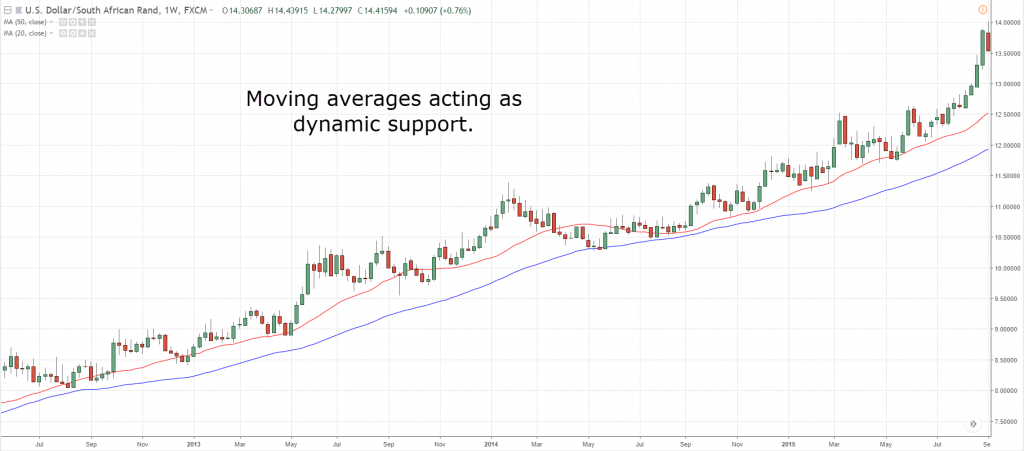
But it can also change over sentence, otherwise known Eastern Samoa, Dynamic Support and Resistance.
Now:
In that location are two ways to identify Dynamic SR.
You can usage:
- Moving median
- Trendline
Let me excuse…
How to use the moving ordinary to identify dynamic SR
I practice the 20 danamp; 50 MA to describe my Dynamic SR.
Here's an exemplar:
However, it's not the only way. You fire use 100 or 200 Momma, and it works fine.
Ultimately, you mustiness find something that suits you (and not blindly conform to some other trader).
Trendline
These are separatrix lines along your graph to identify dynamic SR.
Here's what I mean:
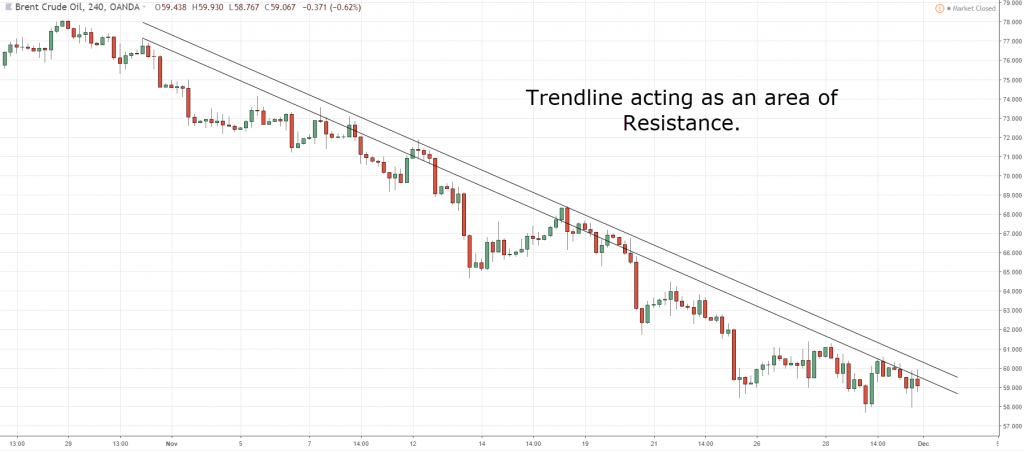
Pro Tip:
Treat Support and Electrical resistance as areas connected your chart (and not lines). This applies to both horizontal and dynamic Steradian.
Verity #4: Confirm and Resistance are the worst places to lay your stop loss
I need not be an Albert Einstein to guess where you'll put your stops.
Below Support and above Resistance, right?
An exercise:

And why is this the worst place to put your stops?
It gets hunted.
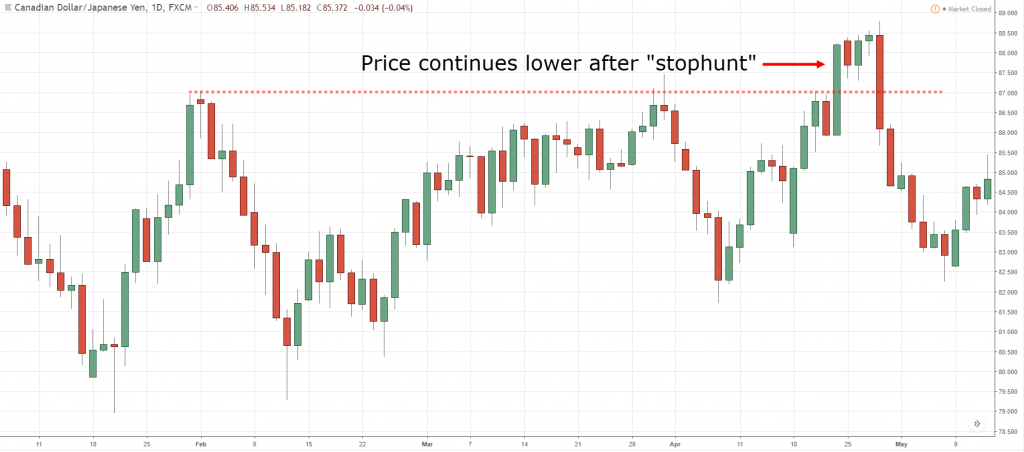
So… how do you avoid it?
Well, you can't avoid it altogether.
But Here are two things you can do…
- Set your stop loss a distance from Sr
- Wait for the candle to close beyond SR
Let me explain…
Set your stop loss a distance from Steradian
You can do this past using the Average True Range (ATR) indicator.
Here's how to have it off:
- Identify the low of Support
- Find the ATR value
- Take the low of support minus the ATR value
If you want to learn more, go watch this training video below:
Wait for the standard candle to close beyond SR
Here's how information technology works…
You only exit your trade if the price closes below the soft of support or the high of the underground.
Here's what I mean:
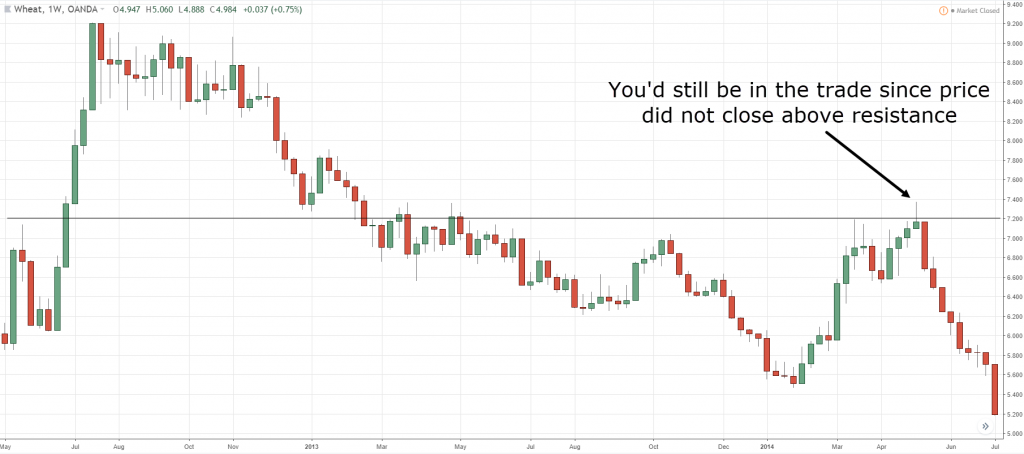
And here's something interesting… do you bed the "veridical move" usually occurs after traders get stopped out of their trades?
And you can take reward of this scenario by victimisation a trading scheme I'll dea with you tardive.
But initiative…
Truth #5: Trading at Digest or Resistance gives you approving risk to reward
The big mistake traders gain is this:
Entering trades when the price is faraway away from Atomic number 38. This requires a large stop loss and offers you a hard up risk to honor.
An example:
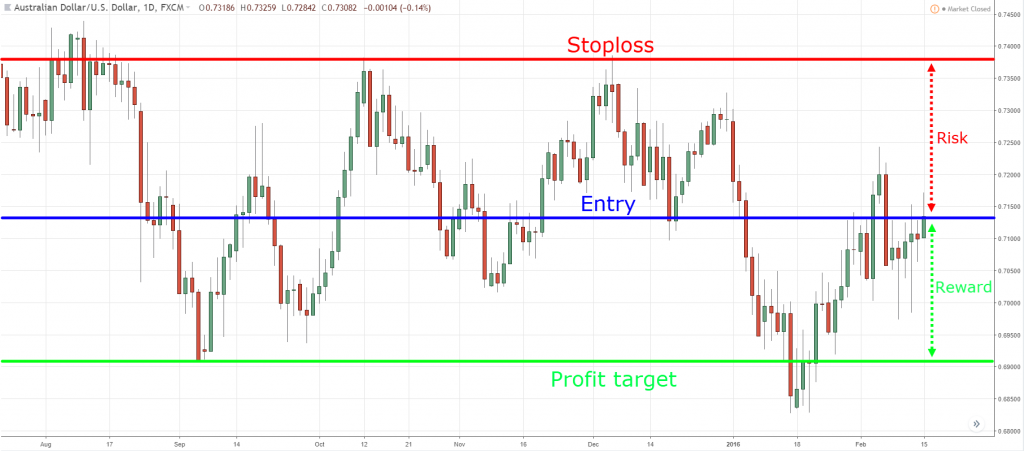
But if you let price refer you, then you'll have a tighter stop deprivation, and this improves your risk to payoff.
Here's what I mean:
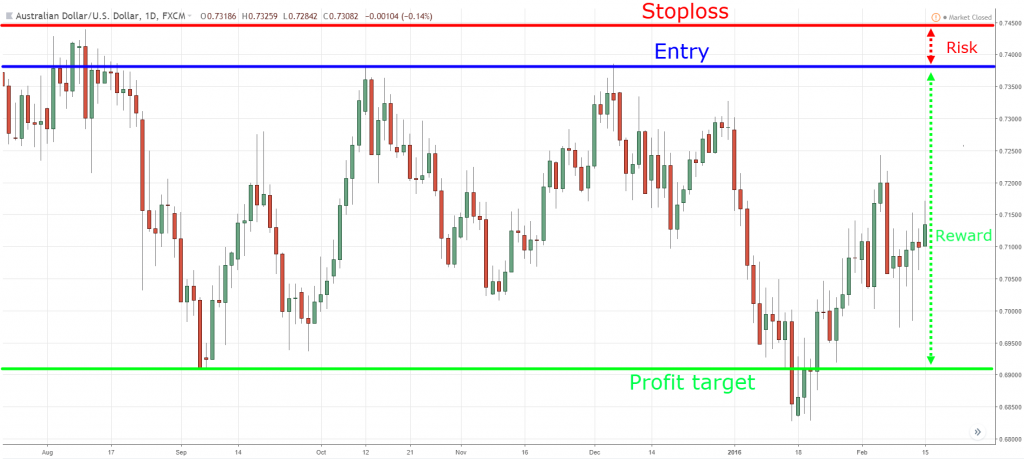
Remember…
Patience pays in trading. Stop chasing the markets and Lashkar-e-Tayyiba price strike you.
Pro Tip:
Mark out your SR areas beforehand. Then seek trading opportunities when the Leontyne Price has concern your levels. If the price is elsewhere, stay out.
In real time…
If you want to learn more, go watch this training video below:
How to tell when Support or Impedance will break — soh you don't cause "treed"
The takeaway is this:
- Support tends to breakdannbsp;a downtrend
- Resistance tends to break indannbsp;an uptrend
- Support and Resistance tend to intermit when at that place's a buildup
Here's why…
Underground tends to break through in an uptrend
Here's a fact:
For an uptrend to continue, it has to consistently break new highs. Thus, shorting at resistance is a low probability trade.
Instead, expiration long-life at Patronage is a better trade in.
Support tends to respite in a downtrend
Likewise:
For a downtrend to go forward, it has to consistently fall in new lows. Thus, releas long at support isn't a serious idea.
But, loss short at Resistance is a great idea.
Next…
Bread and butter and Resistance tend to break when on that point's a buildup
Consider this:
Support is an region with potentiality purchasing pressure. So, the price should move up quickly, proper?
Now… what if price didn't move up and or else, consolidates at Support?
What does IT skilled?
Recall the concept from Truth #1:
The more times Patronage or Resistance (SR) is tested, the weaker it becomes.
So it's a sign of weakness as the bulls couldn't tug the price higher.
Possibly there's none purchasing pressure or, on that point's effectual selling pressure. Either way, it doesn't look good for the bulls and Support is apt to break.
An example:
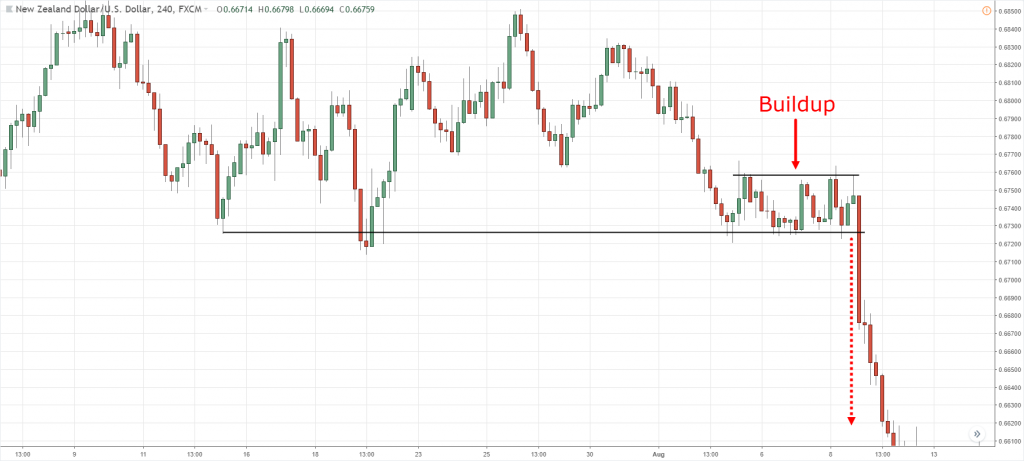
And the face-to-face for Resistance:
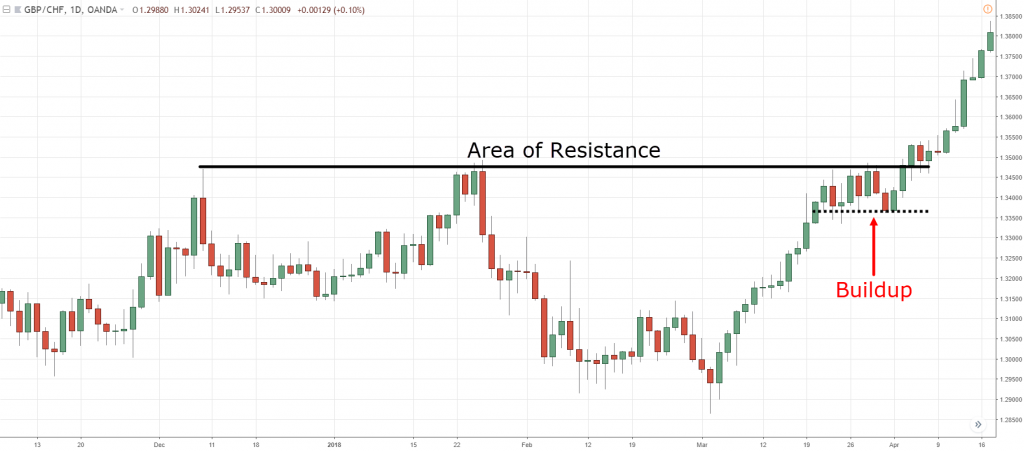
If you want to learn more, go catch this training TV below:
Let's move on…
A Support and Resistance trading strategy that lets you profit from losing traders
Here's a fact:
Support and Resistance attract a lot of care from traders. There will be some sounding to barter the reversal, and others looking to trade the gaolbreak.
Since trading is a zipp-sum unfit… for reversal traders to profit — breakout traders must lose.dannbsp; And for breakout traders to net —reversal traders must lose.
Do you understand?
Good.
Like a sho… let's learn a Support and Resistance trading scheme to profit from breakout traders.
Here's what you need to do:
- Mark your areas of Financial backing danamp; Resistance (SR)
- Delay for a directional move into SR
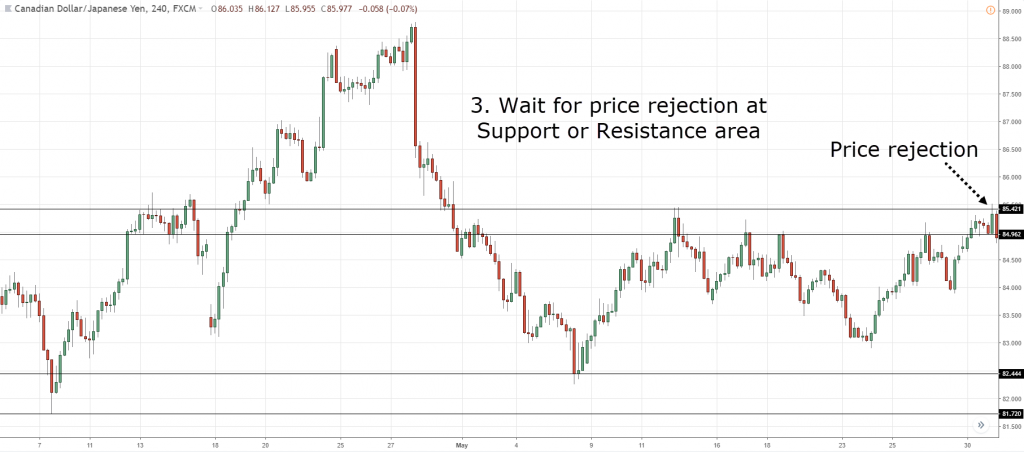
- Hold back for price rejection at SR
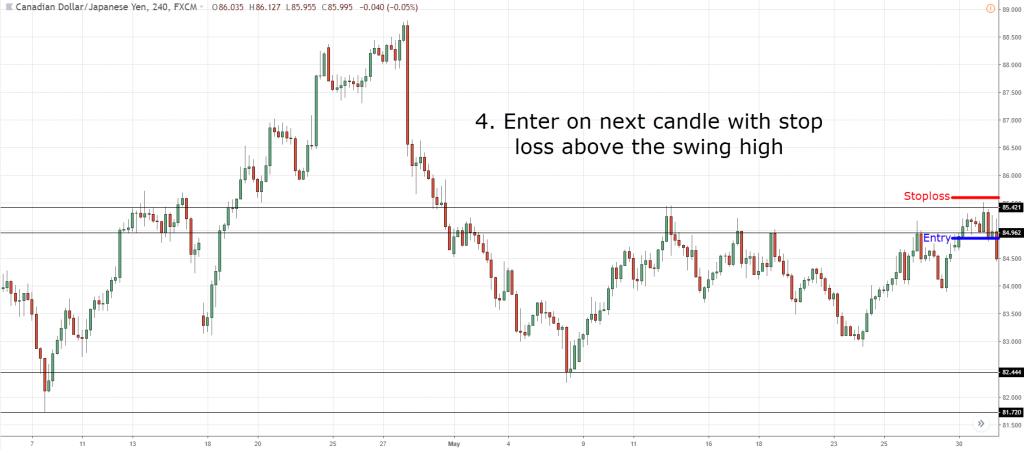
- Enter on the incoming candle with stop red beyond the swing high/low
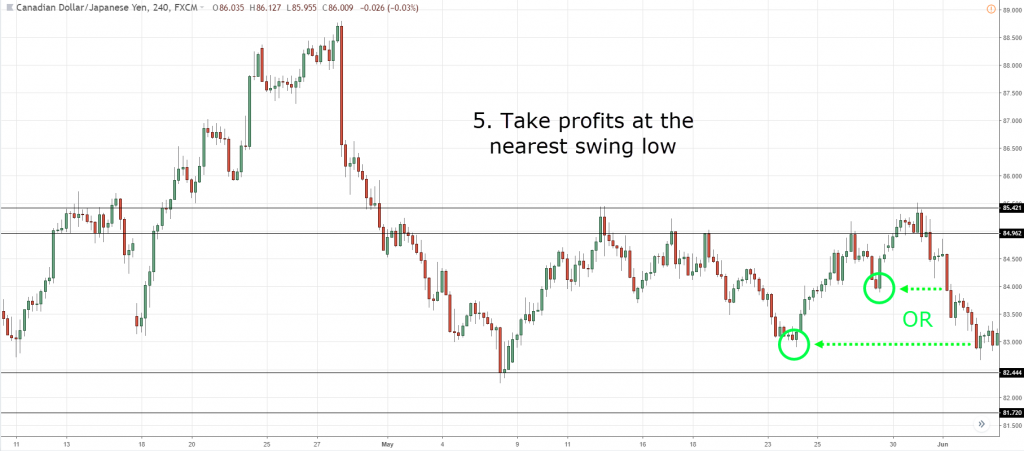
- Take profits at the swing high/low
Hera's what I mean…
1. Mark your areas ofdannbsp;Support danamp; Resistance
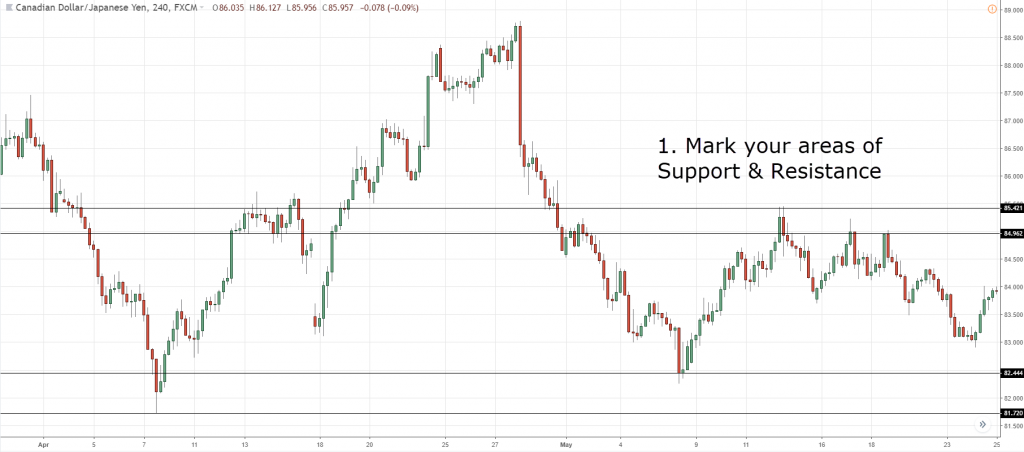
2. Wait for a social control displace into Strontium

3. Wait for terms rejection at SR
4. Enter on the next taper with stop departure beyond the swing high/low
5. Take profits at the swing screechy/low-set
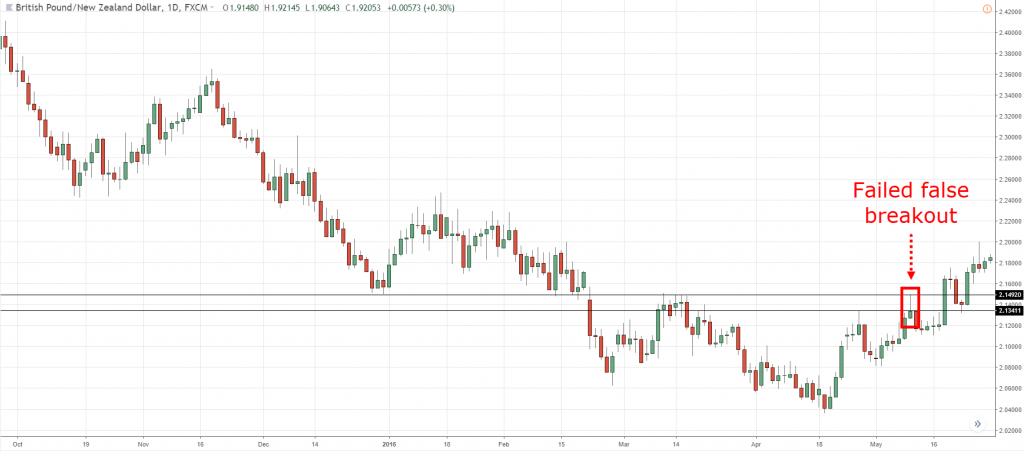
Support and Resistance trading strategy examples
Losing set-up at (GBP/NZD):
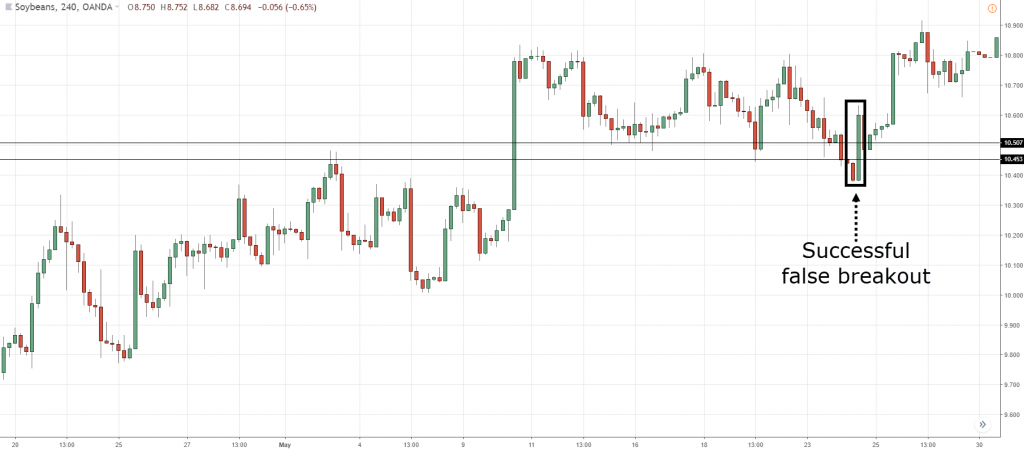
Attractive set-up at (SOYBNUSD):
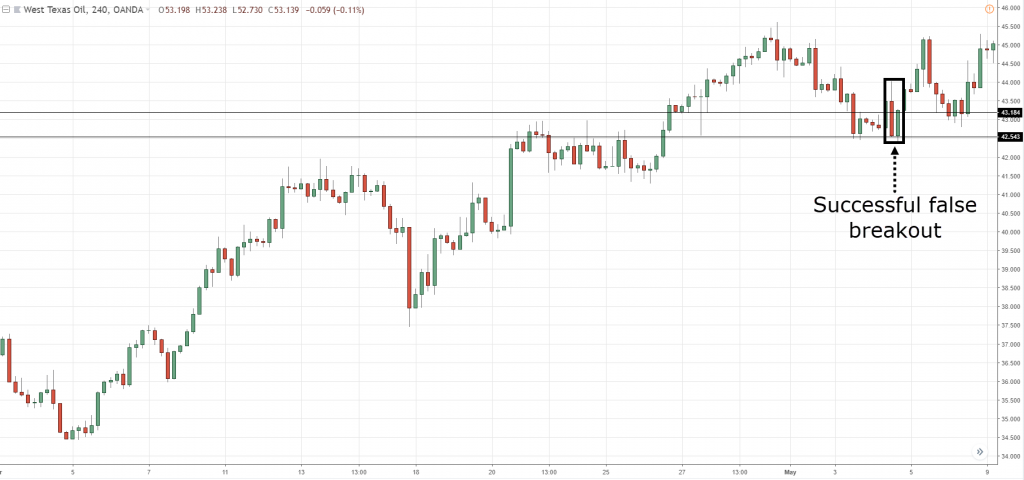
Winning jell-dormie at (WTICOUSD):
Right away:
You must infer this trading scheme isn't the "holy grail". On that point are times you'll mislay to gaolbreak traders — and at multiplication, breakout traders will lose to you.
The solitary way you will survive in the long foot race is through proper run a risk direction. Thence, I suggest risking not more than 1% of your account on each trade.
Frequently asked questions
#1: How do we define how wide the Confirm and Resistance put up be?
An objective way to get along it is to use the Average True Drift (ATR) value as a gauge. Here's what I awful:
- Determine out the flow ATR value
- Contribute 1.5 (up to 2) times of that ATR value to your Substantiate equal
Sol that forms an orbit of Support (similarly for Resistance). You can use this method acting to gauge how wide Reinforcement and Underground rump personify.
A more discretionary approach is to watch how the toll behaves at the Support and Resistance orbit.
For instance, whether the price goes into Back briefly and so get rejected operating room does it pass away deeply into Support then grow rejected. I'll take these two levels to grade an expanse of Support and gauge how wide it should be.
#2: Is IT in-chief for the price to break Backing and Opposition with high volume?
Supported my research, I've discovered that volume doesn't play a big part in a prisonbreak. So, the volume does not have a huge impact on whether a breakout is substantial or not.
#3: Hey Rayner, when you mention buildup, are you also referring to an accumulation?
Nope. A buildup is a tight integration where the candles are lapping one another. It's pretty difficult to key Support and Resistance nor the swing high/low.
Whereas an accumulation is a swan market, where its highs and lows can be easily known and the food market is swinging up and down within the range.
Conclusion
This is what you've learned today:
- The more times Support and Underground is tested, the weaker it becomes
- Support and Resistance are areas connected your graph (and not lines)
- Support and Resistance can existdannbsp;identified using moving average
- Don't set out your stop loss just below Plump for or in a higher place Resistance
- Trading at Patronize and Resistance gives you approbative risk to reward
- A Support and Resistivity trading scheme
At present here's a interview for you…
How make you trade a Support and Ohmic resistanc trading strategy?
Leave a remark below and Lashkar-e-Taiba me know.
support and resistance price action trading strategy pdf
Source: https://www.tradingwithrayner.com/support-and-resistance-trading-strategy/
Posted by: bradleynowest.blogspot.com
0 Response to "support and resistance price action trading strategy pdf"
Post a Comment